The Delhi Sultanate
September 13, 2025• [books] #history #indiaBook: The Delhi Sultanate: A Political and Military History
Author: Peter Jackson
1.
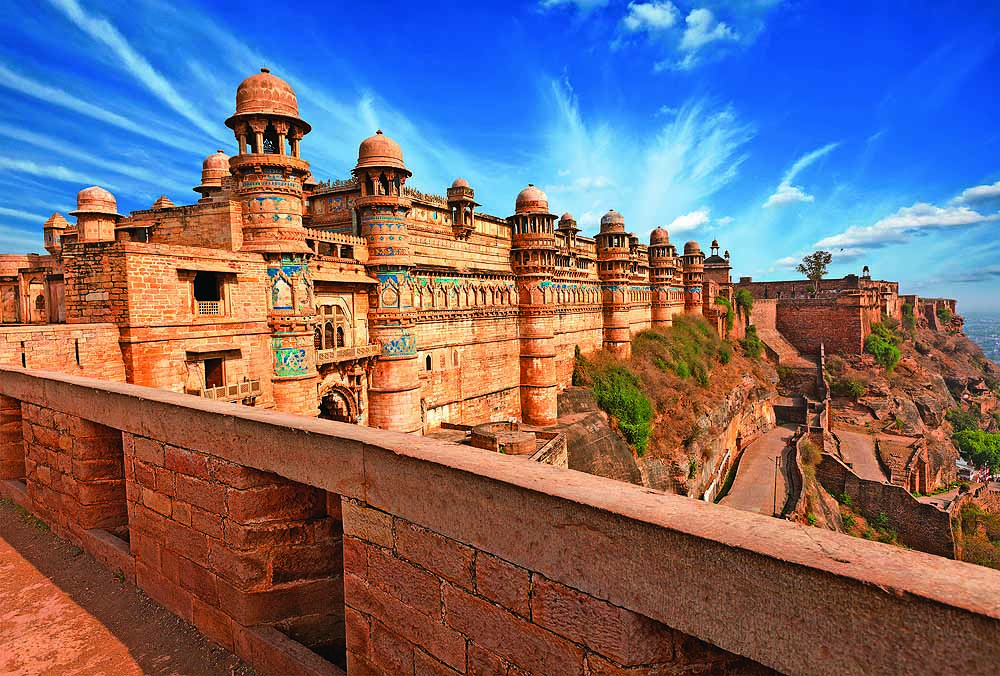
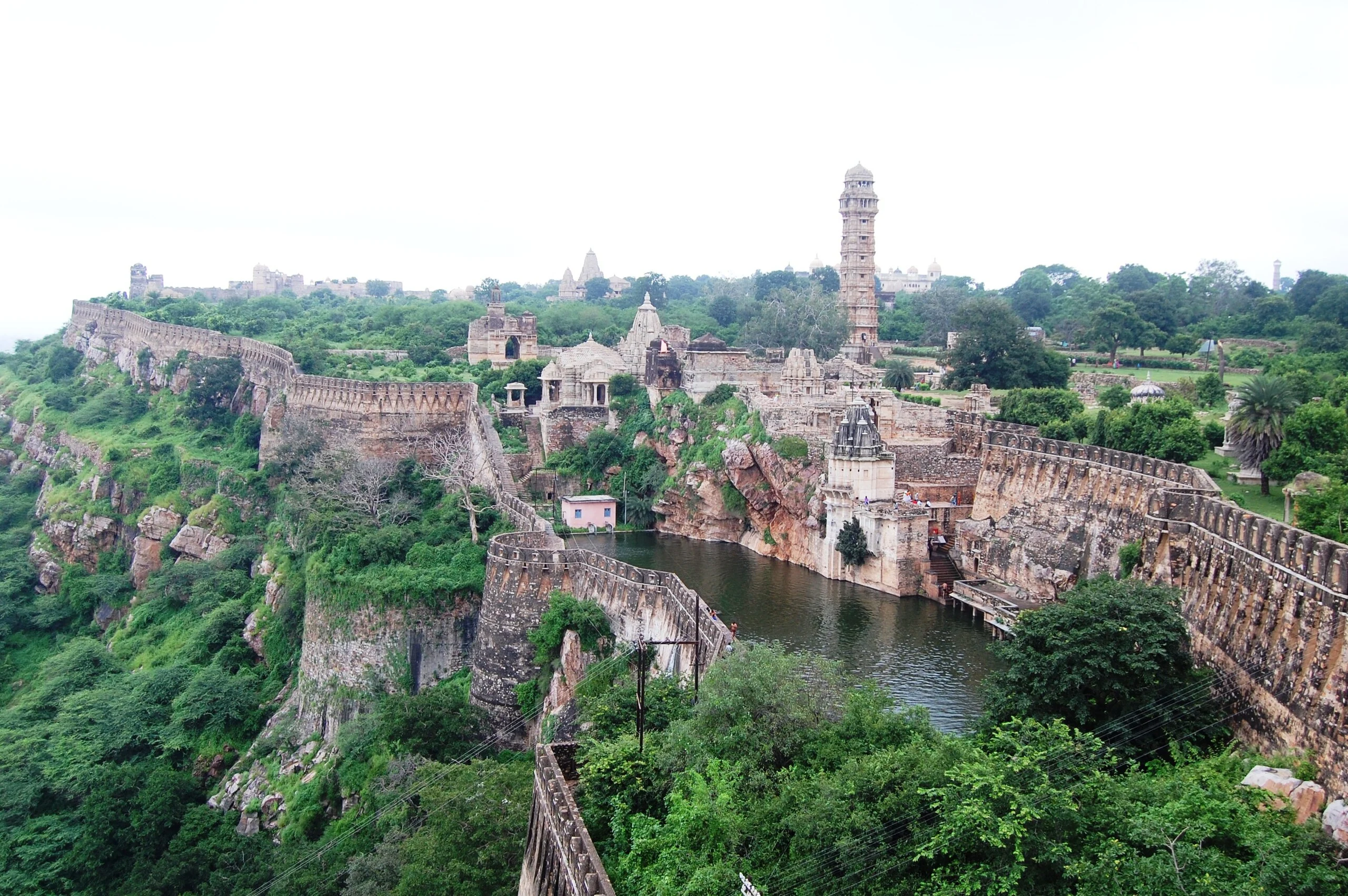
In 1200 CE, the North Indian landscape was dominated by warring Hindu kingdoms, the successor states to the Gurjara-Pratihara polity that had ruled the region with their capital at Kanauj, today in modern-day Uttar Pradesh. Despite not presenting a united front, these kingdoms offered significant resistance to Muhammad bin Sam of Ghori as he expanded the Ghurid empire eastwards. Gradually though, the Ghurids won. A case could be made that the Afghans had a military advantage through their use of Turks. That is, they had an abundance of horses and a lifetime of practice in warring. They secured major victories, such as at Tarain (1192 CE) against Prithviraja and Govindaraja, and against Jayachandra of the Gahadavalas (1194 CE). The native Indian kingdoms did not just roll over however, and direct Muslim rule was only patchy. For example, the Rajput hill fortresses kept reverting to Hindu rulers, requiring recapture by subsequent Muslim rulers, as it was with Gwalior or Ranthambor.
But the military advantage was real. This was reinforced by ideology. The Ghurids and the broader Islamic world's expansionist framework made it easier for them to incorporate fresh troops of steppe warriors into their ranks.
2.
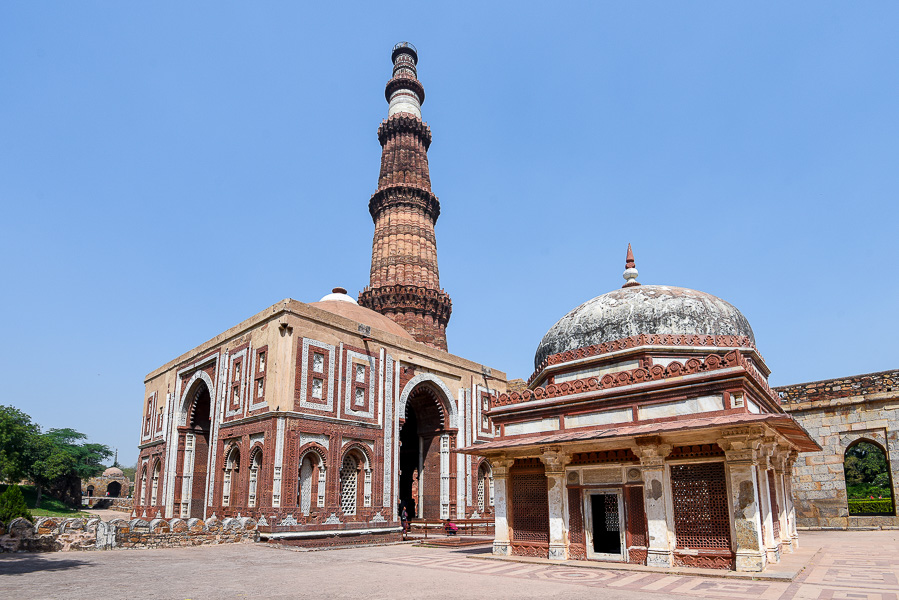
The first Turkish adventurers and marauders came to India following the campaigns of Mahmud of Ghazni around 1000 CE. They had entered Persia and other Islamic lands as free men during large-scale migrations of recently converted nomadic tribal groups from Central Asia. Turkic tribes were prized as slaves because of their martial prowess. Their children were enslaved, converted to Islam, and trained as soldiers. "Slave" in Arabic is ghulam, a word that has been borrowed into Hindustani with the meaning more or less intact. The ambitious empire of Ghor, based out of modern day Afghanistan, had many such ghulams in its service. Muhammad Ghori used them first as lieutenants, later as governors, in Punjab. From these positions of power, they eventually formed their own kingdom in India, known to posterity as the Slave/Ghulam dynasty, or Delhi Sultanate. It should be evident by now that ghulam was a special type of servitude that was not seen as degrading. The descendants of these slaves formed a new elite within the aristocracy. Peter Jackson traces Delhi Sultanate's history from this foundation in 1210 CE under Iltutmish (d. 1236 CE), the ghulam of Qutb ud-Din Aibak. It was the first Islamic state to be established in India.
The major dynasties that formed the Delhi Sultanate till 1400 CE are the Shamsids (Iltutmish and family), the Ghiyathids (Balaban and family), the Khaljis (Jalal al-Din Firuz and family), and the Tughluqs (Ghiyath al-Din Tughluq and family). While Iltutmish and Balaban were at one time ghulams, the majority of the rulers, and their respective descendants, were not.
Aibak's chosen heir, Aram Shah (d. 1210-11), was murdered by Iltutmish before he ascended the throne. Balaban murdered his father-in-law, the last Shamsid sultan Nasir al-Din Mahmud Shah (d. 1266). Balaban also murdered his cousins, and Shamsi maliks, potential rivals for the throne. Of ten sultans in the 62 years after Iltutmish's death, only Balaban died a natural death.
Alauddin Khalji's (d. 1316) reign began in 1296, and he was a nephew of the preceding sultan, who he murdered. Ibn Batuta suggests that he in turn was poisoned by his chosen heir, Khidr Khan. Khidr Khan and his brother were blinded and imprisoned by Alauddin Khalji's slave, Malik Kafur (d. 1316), who was soon enough assassinated by Qutb al-Din Mubarak Shah, another of Alauddin's sons. Qutb al-Din Mubarak Shah then had his now-blinded brothers killed. Qutb al-Din Mubarak Shah (d. 1320) in due course met his end at the hands of his lover, the Indian slave Hasan, who ascended the throne as Nasir al-Din Khusraw Shah.
Ghiyath al-Din Tughluq Shah, the first of the Tughluqs, marched to Delhi and overthrew Khusraw Shah. He died when a newly constructed building collapsed on him at Afghanpur in 1324 CE. Contemporary chroniclers strongly suspected that his eldest son and designated heir, Muhammad bin Tughluq, had contrived his death. What is certain is that Muhammad bin Tughluq (d. 1351) killed his brother.
This book's narrative ends with the fall of Delhi to Timur in 1398, when the last Tughluq sultan, Mahmud Shah, fled Delhi after the rout of their forces.
All our sultans, with the one Indian exception noted above, were of Turco-Mongol stock.
3.
Lahore served as the capital of Muhammad Ghori's Indian province and the centre of Islam in India when Qutb ud-Din Aibak established himself as ruler there in 1206. Aibak was the Ghurid sultan's slave. The capital gradually shifted to Delhi due to frontier pressures - first from the expanding Khwarazm empire, then from the Mongols.
While Delhi became an accidental capital, it proved an ideal location for raids into Hindu territory. Daring campaigns were conducted against Deogiri, Warangal, and Madurai. Such raids were highly lucrative, and the Sultanate gradually expanded its ambition from plunder to permanent suzerainty. However, Delhi's control over territories beyond their core northern region always remained weak. Governors and local chiefs routinely established independent rule. Bengal was incorporated into the Sultanate by Iltutmish, and would be an exemplar of this persistent insubordination. Gujarat was initially incorporated by Aladdin Khilji in 1310 CE, would follow a similar pattern of revolt and reconquest. By Tughluq's death in 1351 CE, "Bengal and every tract south of the Vindhyas had declared their independence, and none of these provinces was ever recovered." The Deccan remained under Delhi for less than thirty years.
Maps show a uniform shading to define the extent of Sultanate rule, though a series of dots would indicate with greater realism the extent of actual power. Each dot would be a fortified city or garrison, where the provincial Muslim governor had chosen to recognize the monarch. Even within these areas, the authority of the governor waned with distance, depending on local military operations or distance from Delhi.
Ibn Batuta, who traversed these lands between 1333 CE and 1347 CE, noted how India was different from other Muslim polities. Elsewhere in the Islamic world it made sense to talk about Dar al-Islam (abode of Islam) and Dar al-Hard (the “war-zone” or pagan territory), but not in India. Here, there was no clear physical boundary between Muslim and non-Muslim lands.
4.
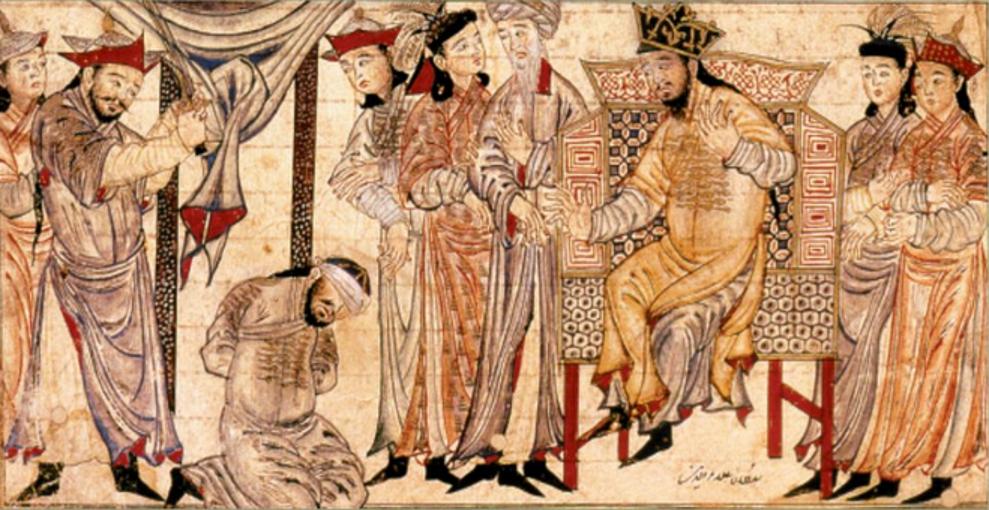
Iltutmish's initial encounter with Mongols were diplomatic and indirect. Genghis Khan was in the process of swallowing up the Khwarazmian empire, and chased the son of that Shah, Jalal al-Din all the way to the Indus. Genghis Khan contemplated returning to Mongolia through the Himalayan foothills and sent envoys to Iltutmish to request permission to pass through his dominion. Iltutmish sent the envoys away under guard, with a no. He was lucky that Genghis was superstitious enough to take another way that one time. The destruction of the Khwarazmian empire inadvertently ensured Muslim India was not part of the Khwarazmian sphere of influence or direct control. The Mongols ravaged the regions of Multan and Lahore, and, under Ogodei, these were subject to the Mongols and considered part of their border territory.
Mongol incursions devastated these border regions, with Punjab suffering annual attacks. The Mongols frequently penetrated deep into the Delhi Sultanate's territory, even reaching the capital itself on multiple occasions. This threat along the Indus frontier forced successive Sultanate rulers into aggressive militarization and massive resource allocation for defense. For example, Sultan Balaban (d. 1287 CE) established a separate army specifically to combat the Mongols. Alauddin Khalji implemented drastic fiscal and administrative measures to support large armies while keeping prices low in the capital to fund his troops. Muhammad bin Tughluq had a large Khurasan force, intended for an offensive against the Mongols, with an estimated 470,000 men.
This frontier pressure also created a major flow of human capital into Delhi. Iltutmish deliberately positioned himself as a refuge for those fleeing the Mongols, attracting Persian scholars, ulemas, and soldiers of fortune. There was another source of human capital. Victorious campaigns against Hindu kingdoms provided slaves for the Sultanate's ambitious construction projects. A historian of the court, Barani, reports that Alauddin Khalji employed 70,000 Hindu laborers on his Alai Darwaza and Jamait Khana mosque. Indian slaves and their paiks also served in Muslim military campaigns.
The resource drain of constant frontier warfare ultimately came at the expense of internal expansion. Muhammad bin Tughluq's heavy taxation in the Doab, imposed to fund his Mongol offensive, provoked widespread revolt among cultivators, leading them to burn crops and flee to the forests. Successive rulers eventually abandoned distant campaigns, focusing instead on internal administration. This conscious reduction in long-range military capabilities left the Sultanate unprepared to face Timur in 1398, who destroyed Delhi and massacred its population.
After Timur's devastation, the Sultanate reverted to being merely one of several competing northern powers. New or renascent Hindu principalities (Mewar, Alwar, Gwalior) and rival Muslim kingdoms (Gujarat, Bengal, Malwa) eroded its territorial control. The Delhi Sultanate itself lacked a ruler for three years following Timur's departure.
5.
The Ghurid historian Siraj al-Din Juzjani served in the court of Sultan Nasir ud din Mahmud Shah, son-in-law to Sultan Balaban. In his Tabaqat-i Nasiri, he frequently refers to Muhammad Ghori as Sultan-i-Ghazi, the holy warrior sultan, a pillar of Islam. Juzjani likens his triumphs over the Indian infidel to the victories of Muhammad Ghori's contemporary Saladin over the Christian Franks of Syria and Palestine. It's been suggested that the primary motivation was booty.
Qadi Nasir al-Din 'Umar accompanied Timur on his invasion of 1398 to Delhi. He produced a work, now lost, Ruz-Nama-yi Futuhdat-i Hindustan. Abridged versions of it have survived. In turn, they have been incorporated in other works, including the possibly fabricated memoir Malfuzat-I Timuri. Timur's biographers say his motivation to invade Delhi was the merit he would gain as a ghazi by taking part in a religiously mandated holy war (jihad) against non-believers. Timur is said to have declared: "By the order of God and the Prophet it is incumbent upon me to make war upon these infidels and polytheists". It's been suggested that a crucial motivation was booty.
Babur, a Chagathay Turk, claimed direct descent from Timur through his father. His mother traced her ancestry to the Mongol Genghis Khan. Babur's perspectives are included in his memoirs, Baburnama. For Islam's sake, he says, he wandered pagan lands, battled Hindus and destroyed idols, and thus became a ghazi. He also reveals more concrete evidence for motivations other than holy war or protection of the faith: he was displaced from his ancestral lands - Samarkand - and he wanted territory of his own. He decided this territory would be the claims of his forbears, that is Timur, to sovereignty east of the Indus. Babur meticulously recorded the financial potential of territories, making estimates of the tax yield of Sultan Ibrahim Lodi's north India in monetary terms.
Delhi fell to Babur in April 1526.
6.
One primary source for life under the Delhi Sultanate, and the ambitions of its rulers, is the works left behind by its court historians: Barani, 'Isami, Amir Khusraw, and Shams-i Siraj. For external accounts, there's Ibn Batuta's Rehla, and records compiled under the Mamluks of Egypt and Mongol Persia. Ghurid historian Juzjani's Tabaqat-i Nasiri has sections on the early Delhi Sultanate. Finally, there are administrative texts such as Hajji 'Abd al-Hamid Ghaznawi's Dastur al-Albab, a treatise, among other things, on the subject of taxation.
There are no contemporary Hindu narrative sources, except some inscriptions in stone or copper plate grants, although the references there to Mlecchas, Turushkas and Yavanas are vague.
These sources reveal a society where violence and instability pervaded even elite circles, with purges one bad night or sultan away. Wealth offered no security when political favor could shift overnight. The Delhi Sultanate was a society heavily reliant on and shaped by slavery, and political elimination was a standard tool of governance.
For military and administration, the Sultanate relied on Turkish slave guards, the ghulams. They were highly valued for their martial skills, received religious instruction, and rigorous military training. Slaves, both Turkish and Indian, were promoted to key administrative and military positions.
Hindus were extensively enslaved during military campaigns, with many thousands brought back as booty and used for labor or sold. While the wealthy and powerful enjoyed more comforts and opportunities, their lives were far from secure. Muslim chroniclers, such as Hasan-i Nizami, proudly recorded the demolition of Hindu temples and the reuse of their stone for constructing mosques, as seen in Delhi and Ajmer. Fakhr-i Mudabbir enthusiastically claimed that "Infidel towns have become cities of Islam. In place of images, they worship the Most High. Idol temples have become mosques". Sultan Firuz Shah, in particular, claimed to have destroyed newly built Hindu temples and replaced them with mosques, even repopulating a township with Muslim settlers, although this policy was mostly enforced in the vicinity of Delhi. Firuz Shah's edict, promising release from the jizya (poll-tax) to Hindus who converted to Islam, indicating a direct economic incentive and pressure to abandon native faiths. Amir Khusraw notes that the Turks could seize and buy and sell Hindus.
A recurring theme in Barani's writings is that infidels must not be allowed to live in ease and affluence. He recounts a hypothetical conversation at Iltutmish's court where the ulama argued that Hindus should be given only the choice between death and Islam, as they were not "People of the Book". While the wazir deemed this impolitic due to the small Muslim population, the ulama insisted that the sultan should at least refrain from honoring Hindus or permitting idolatry.
From the perspective of the Sultanate's chroniclers, Muslims constituted a common people, and Hindus were rarely seen as inherently interesting, but rather "only as converts, as capitation tax-payers, or as corpses".
Indian Muslims and immigrant Muslims were generally treated differently, especially within the elite and court circles, with a clear preference for the latter, though Indian Muslims could rise in status. Ibn Battuta explicitly states that Muhammad bin Thughlaq preferred foreigners to the indigenous aristocracy and that the Indians in turn loathed the immigrant 'Khurasani' nobles. Barani often stigmatized Muhammad's Indian servitors as lowborn.
And yet, the Hindus and Jain and non-Turks did survive and remained a significant majority of the population, often in positions vital to the functioning of the state.
In rural areas, forests, and hills, remained "the domain of the infidel". Even in fortified towns, such as Gwalior, Hindus formed the majority of inhabitants. Muslim victory did not always entail the displacement of Hindu rulers. Often, Hindu chiefs, the rais and the ranas, were allowed to retain their thrones in return for paying tribute.
The Turko-Persian nobility accumulated enormous debts to Hindu bankers and brokers, known as Multanis, who remained among the sultan's wealthiest subjects. Hindu clerks were needed to staff the administration even if under Muslim supervision.
The majority of rulers within the Sultanate extended the status of 'protected peoples' (dhimmis) to Hindus, to the fury of the ulema. This status, in return for acceptance of Muslim rule and payment of the jizya (poll-tax), theoretically offered protection of life and property. This was a pragmatic adaptation as in the Islamic lands outside of India, dhimmi status was applied only to monotheistic people of the Book.
There were some periods of accommodation and royal favor, based on any one Sultan's personal disposition. Muhammad bin Thughlaq was often interested in Hindu practices, attending the Holi festival and frequenting jogis, though that made him an apostate in the eyes of our historians, 'Isami and Barani.
Muslim rulers had adopted distinctly Indian practices, such as riding elephants and consulting Hindu astrologers. Donations of tax-free land to Brahmans, Jains, jogis, and temples, recorded extensively in the later Mughal era, often refer to renewals or extensions of grants made by earlier Muslim rulers, indicating continuity in Hindu religious and landholding institutions even through periods of Muslim rule.
7.
The Delhi Sultanate established a historical precedent: the first and sole bastion of Muslim power in the Indian subcontinent for a hundred years. If you take seriously the argument that they prevented the Mongols from invading deeper into the country, one consequence of this pressure from the Mongols was administrative reforms and centralization of a sort not seen in India before.
The Turks and their situation - smaller ruling elites in a sea of hostile natives - accelerated the process of urbanization across much of northern India. Small market towns and large garrison cities grew in number throughout the Ganges basin. The need to maintain expensive horses and well-trained soldiers required the regular availability of cash to pay for them. The new urban centers expanded opportunities to trade. These changes fostered the development of a money economy and an expansion in craft production.
Iltutmish's consolidation of power allowed him to launch a new coinage system based on the pure silver tanga, something that fostered economic integration within the expanded Sultanate. One major innovation was the iqta' system, a transferable revenue assignment in lieu of salary for military service. This became hereditary, allowing positions, titles, and emoluments to pass from father to son. It would influence later feudal systems and the rise of powerful regional families, and eventually the Mansabdari system of the Mughals, and in turn the Zamindari system across the country via the East India Company. Alauddin Khalji's harsh, roughshod introduction of a highly centralized and rigorous revenue administration based on measurement and cash payments, marked a fundamental departure from earlier decentralized, agrarian systems in North India. Muhammad bin Tughluq's administration directly colonized the northern Deccan with North Indian immigrant-settlers between the Narmada and Krishna Rivers and assimilated indigenous chieftains as iqta'dars.
The Sultanate's internal conflicts, Mongol invasions, and policies of expansion to direct rule led to the secession of major provinces (e.g., Bengal, Deccan, Madurai) very quickly. Deccan insubordination would prove enduring. The Deccan would always remain another frontier to Delhi, including for the Mughals. The Mughal Empire would eventually unravel trying to get its Deccan holdings under central control. Native imperial authority would pass from a Deccan power, the Marathas, a confederacy no less, to another Deccan power, the East India Company, operating from Bombay and Madras. Another Deccan power, the Hyderabad State, was a significant regional power and its Nizam would at one point be the richest man in the world.
The Delhi Sultanate, it is fair to say, established a template for Muslim rule in India. Military elites would be drawn from Persia or Central Asia. The Sultan, while the defender of Islam, would accommodate his Hindu majorities. And there would be persistent attempts at taming the Deccan, and this would devolve into depending on household estates for control and revenue. That is, dependence on the Zamindars, and the title holders such as Patedars and Deshmukhs. This pattern of ambitious central authority ultimately constrained by local realities is certainly a feature of Indian governance, then and now.
After trudging through this book, there's a claim I feel bold enough to make. The Delhi Sultanate's cycles of conquest, revolt, and reconquest initiated a sustained and contentious dynamic between a powerful northern imperial authority and diverse Indian regional polities. This period saw the imposition of tribute and the adoption of some external administrative or cultural forms, but frequently provoked strong resistance. The Mughal Empire inherited and deepened this cycle with its tributaries and successor states and conditioned a lot of northern and deccani Indians to view Delhi as a symbolic authority of imperial power. This was leveraged by the Marathas, the British East India Company, and the modern Indian state for their own legitimization and internal consolidation.