Temüjin
July 14, 2025• [books] #mongolsBook: Genghis Khan: His Conquests, His Empire, His Legacy
Author: Frank McLynn
I plod through most books. Relatively speaking. History books on the other hand, I devour. Existing commitments take a backseat and we can’t have that. So I don’t read as much history as I could be. Unfortunately for all my resolve, Frank McLynn’s Genghis Khan biography was $1.99, and I had a long flight ahead of me. As it were, that was a fast 48 hours. Now I am going to tell you all about it.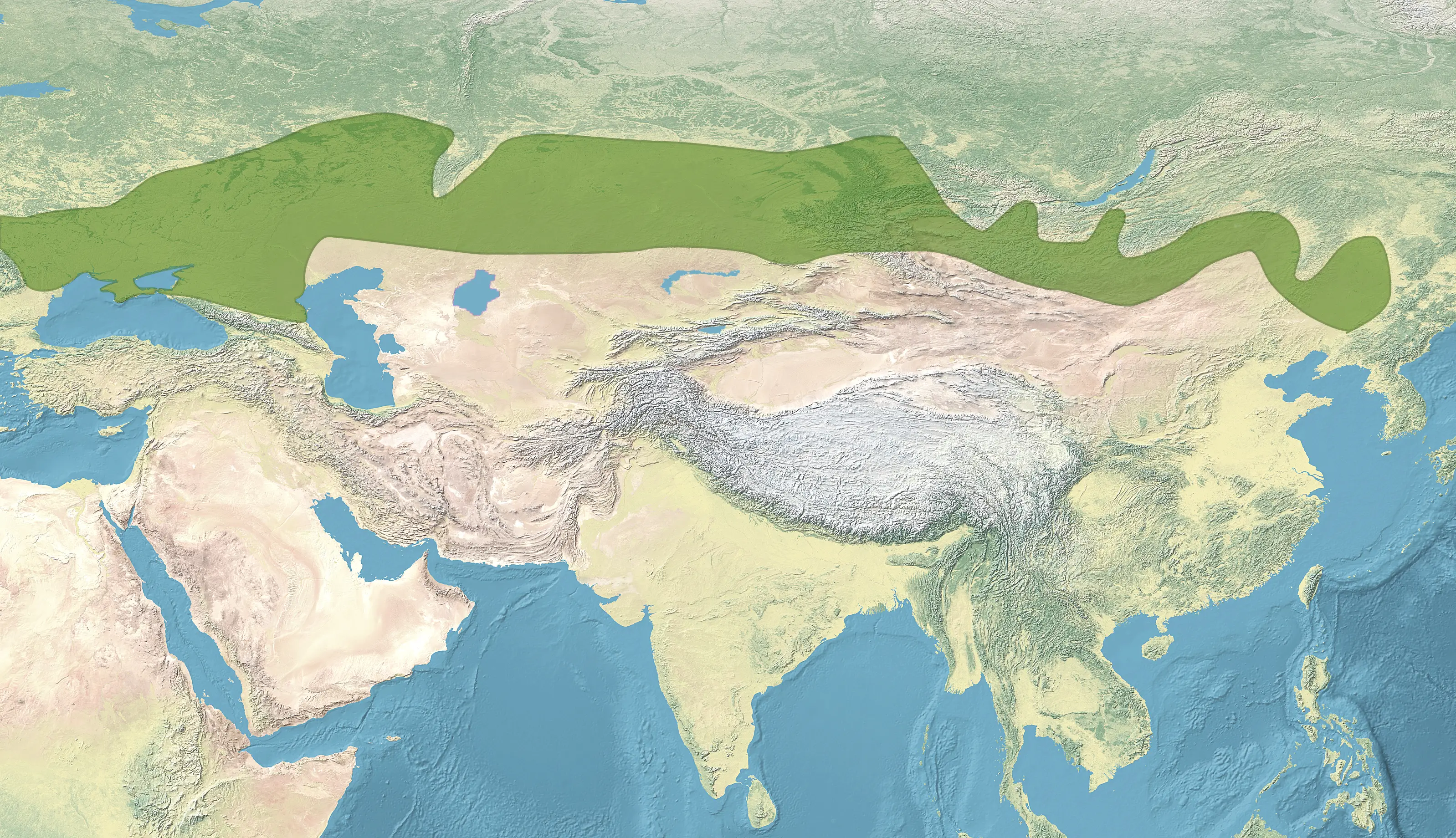
For centuries, the steppe peoples struck terror into the hearts of settled civilizations. The Han Dynasty built walls and maintained standing armies to contain nomadic raiders. Rome’s final collapse came partly through strain brought on by Attila’s Huns in the decades preceding it. In East and West, archer-warriors on horseback would suddenly appear at the edge of cities, wreak havoc, kill the old and the infirm, take women and children, enslave who they could, and disappear, leaving sedentary empires to rebuild their borders and wait for the next storm from the grasslands. Sometimes a steppe group would settle and rule their frontiers, like for example Tabgasch in northern China between 4th and 5th centuries CE, who then eventually sinicized while ruling as Northern Wei. Others created substantial empires in the steppe, such as the Gokturks and their Khaganates between 6th and 8th century CE, that were successful within the steppe. This did not happen as often as it could have because steppe confederations were fragile, dissolving immediately on the death of charismatic leaders or on defeats. All the nomadic groups encountered similar issues that eventually broke their power: succession crises, loyalty conflicts, difficulty governing diverse populations. The Mongols of early 13th century CE were the only ones to defy the pattern and establish a long standing empire beyond the steppe. There is a very good reason why: Temüjin - better known as Genghis Khan - and his talent for organization.
Most world conquerors’ empires don't survive them. It did not for Alexander. Nor Napoleon. Or Hitler. The Mongol Empire outlasted the first Great Khan for a couple of generations, maintaining coherence far longer than Alexander's immediate collapse. People have been making the case that despite all the killing, it led to greater prosperity for everyone in the Empire and beyond. Pax Mongolica. One can also make the case that respecting trade and deifying the flow of goods and wealth is one of the better ways of running a civilization.
Genghis's genius was this: he broke up a clan system that was unstable due to shifting loyalties between different tribes and lineages, created a decimal military system where one could not leave one's unit, and instituted promotions based on merit over birth. In addition, his superstate was constantly expansionary, a system that channeled all the energies that would once have gone into tribal warfare into fighting the world, one which returned untold booty and pillage. He did all this in one lifetime, in steppes that had functioned the old way for centuries. And he did this while being illiterate, making his improvements without access to classical military treatises East or West, or any administrative models from Roman, Persian-Islamic or Chinese worlds. Genghis built a military machine that could simultaneously plan and execute campaigns against Jin China, Khwarazm, and eventually Western targets.
There have been tribal confederations that became kingdoms, but that happened gradually over generations, and stayed within their cultural sphere. That's how it was with the Germanic tribes after the collapse of Rome, forming the Frankish states. The Arab confederation under early Islam is another example, drawing on existing networks - there had been centuries of trade and contact between the Arabs and the Byzantine and Persian administrative systems. Genghis was unique in compressing what usually took 200 or so years of state building into some 20 years, starting from a more or less blank slate.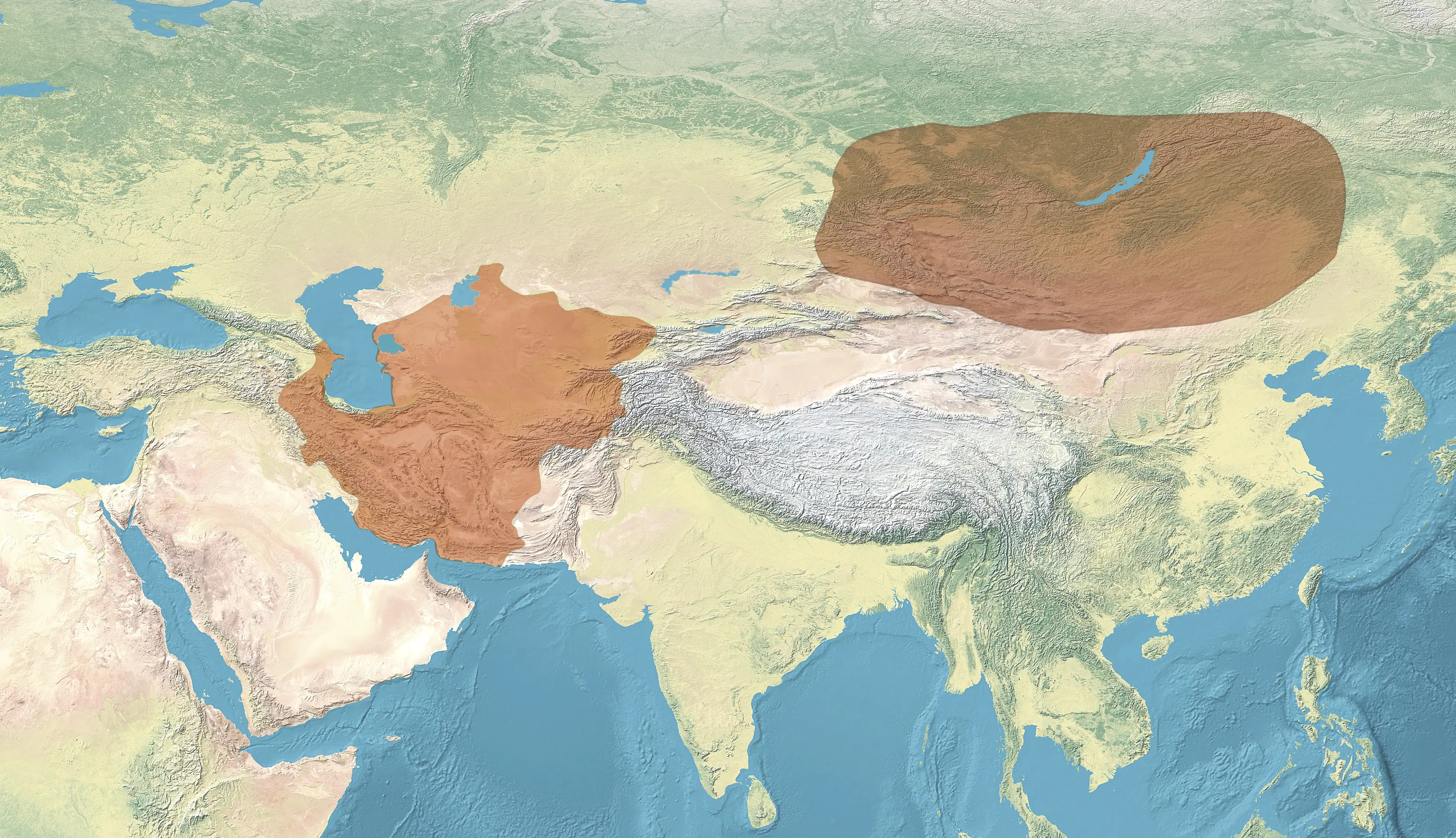
Some of this empire-building was driven by revenge and resentment, tribal feuds scaled up. The destruction of entire civilizations often stemmed from personal slights that would have been perpetual clan disputes in the old system. Muhammad Shah II's Khwarazmian empire fell largely because of one governor's massacre of Mongol merchants, infuriating Genghis. The Merkit, one of the five principal tribes of Mongolia, were chased all the way across the entire Eurasian Steppe because they had once kidnapped Borte, Genghis's wife, as payback for an earlier slight. This pursuit and the eventual hounding of the last of the Merkit north of the Syr Darya by Subedei and Jebe got them in contact with the Cumans, who had allied with the Merkit. The Cumans thus became enemies of the Mongols, and in turn this led to the eventual conquest and vassalage of Georgia and from there various Russian principalities.
An aspect of the empire that I was unaware of and have come to appreciate was the institutionalization of knowledge. Take the early years of the Jin campaign, for example. They were a slog because the Mongols had no experience with fortified cities. But the Mongols systematically absorbed Chinese engineers and became good at siege warfare. So good in fact that, when they moved west to Central Asia, they could absorb Samarkand, Bukhara, Merv, etc., and finish the conquest of the Khwarazmian Empire in two years. This institutional memory is remarkable for two reasons. One, till recently they were nomadic warring bands who hadn’t changed their ways of operating for centuries. Two, they demonstrated they could preserve and disseminate knowledge from one end of the empire to another, like they would troops, suggesting it had to be part of some training protocol. Under Genghis, the Mongols were learning (and fighting) machines.
There's a lot of slaving and dying that accompanies these wars, though it is hard to tell if it was much worse than what the Ottomans or Europeans or humans in other pre-modern places with enough capacity and motivation for violence did, especially toward those they saw as culturally foreign. The Turkic mamluks enslaved hundreds of thousands of Hindus, Buddhists, and Jains from the Ghaznavid campaigns of 11th century to during their rule of Delhi under the sultanate in 13th century. This happened in such large volumes that it often caused the market for slaves to crash in prices due to oversupply in Central Asia. There was a pipeline for slaves from the Caucasus and East Africa into the Islamic world of Egypt, Persia, and Central Asia. With respect to the Mongols, the Persian record-keepers note numbers that McLynn says are greatly exaggerated. Given the Mongols' pragmatic tolerance toward religion, a marked improvement over their contemporaries, their methods appear less exceptional within the context of medieval warfare. Frank McLynn understands the Mongols’ “surrender or die” policy as strategic, using terror to avoid hand-to-hand combats:
The simplest explanation for the chilling policy of ‘surrender or die’ was that the Mongols, as a far from numerous people, were always obsessed with casualties, so that the best-case scenario was a walkover surrender in which none of their troops died.
It appears that the Mongols didn't leave their families at home when they went campaigning during their tribal warfare phase, before unification. They brought wives, children, and all their stuff along for the ride. So every fight was a fight to the very end, accompanied by the threat of not just loss of life, but also that of slavery and bondage of their blood relatives. This high stakes attitude, total commitment approach, is what the early Mongols carried into their conquests. Every battle should be a complete victory with no half-measures. It might also inform some of Genghis’s personal qualities as exemplified by the Mongol war machine - speed, thorough preparation, use of sophisticated espionage networks, and psychological warfare. One anecdote in this largely grim recounting of the Mongols terror amused me: Genghis used his spies to circulate rumors that Muhammad Shah’s own mother, Terken Qatun, who wielded significant political power, intended to join the Mongols during their invasion of Khwarezm.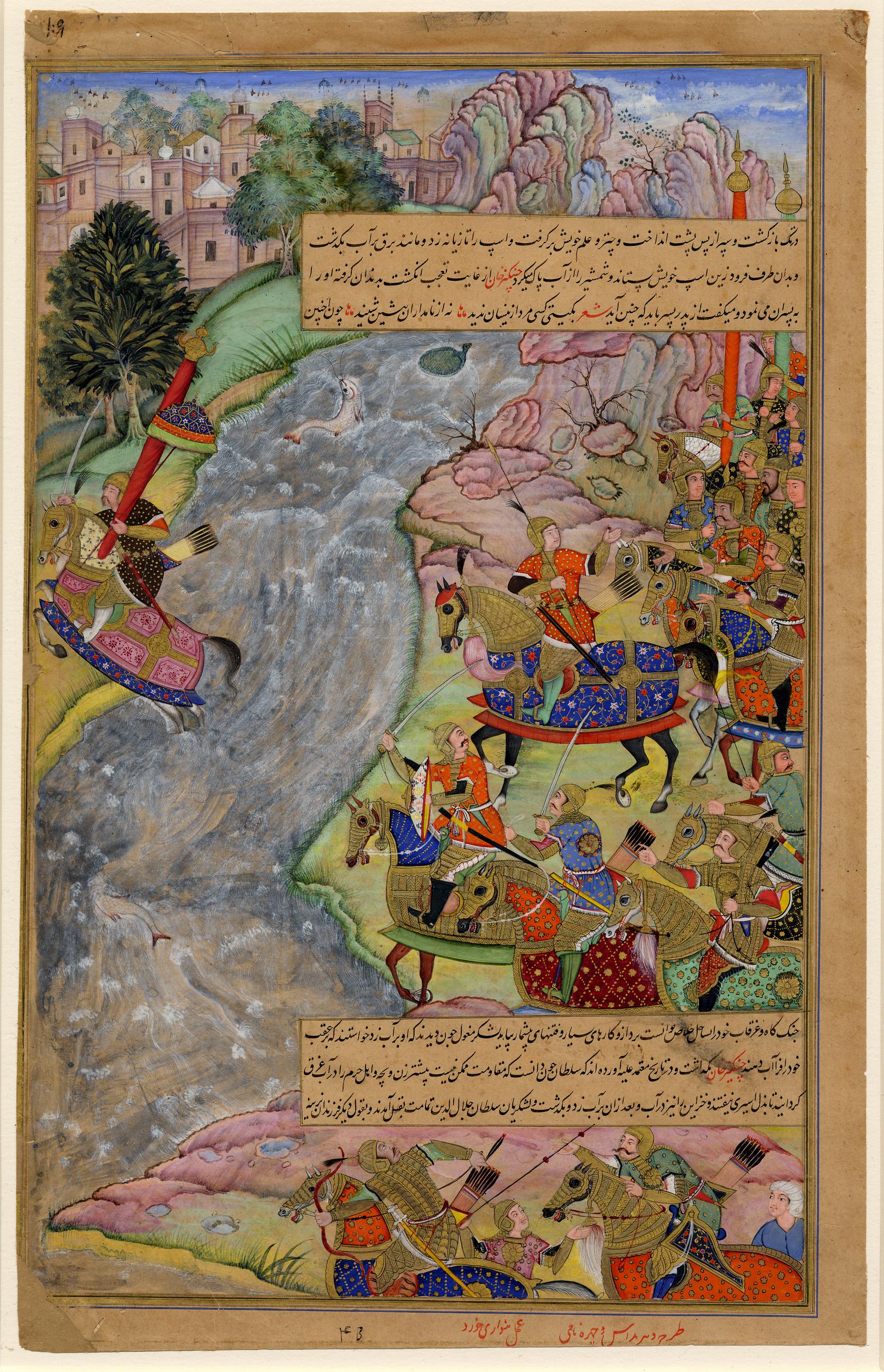
McLynn draws comparisons between Mongol achievements and contemporary European developments in science, social organization, and religion, to dismiss Genghis as a moral pygmy. This misses the point entirely. Medieval Europe built on centuries of Roman infrastructure, Christian institutions, and sustained contact with the Islamic world. The Mongols had none of this - no written language, no administrative tradition, no high culture. That Genghis could transform his tribal confederacy into an organization capable of absorbing Chinese engineering and culture, Persian administration, and whatever else they encountered, then systematically disseminate that knowledge across continents does much to his credit.
The importance of Genghis to the Mongols deserves some thought. What would a man of his organizational abilities have accomplished if born in Khwarazm, Constantinople, or Jin China? I would bet on “very little”. These were societies with entrenched hierarchies. The path to advancement was fixed, with their elites already in place. And elites are defensive of their positions. A brilliant outsider might rise to middle management, perhaps minor nobility, but never to the leadership, with access to levers that could remake entire systems. Even if such a promotion were to happen, I doubt the leadership would be revolutionary: the years in the system would have beaten that out of him.
There’s a lesson in here, a parallel, to modern corporate organizations, about why startups generally crush larger incumbents, but I do not want to belabor the point.